Recycling batteries safely and responsibly
Recycling Laws by State
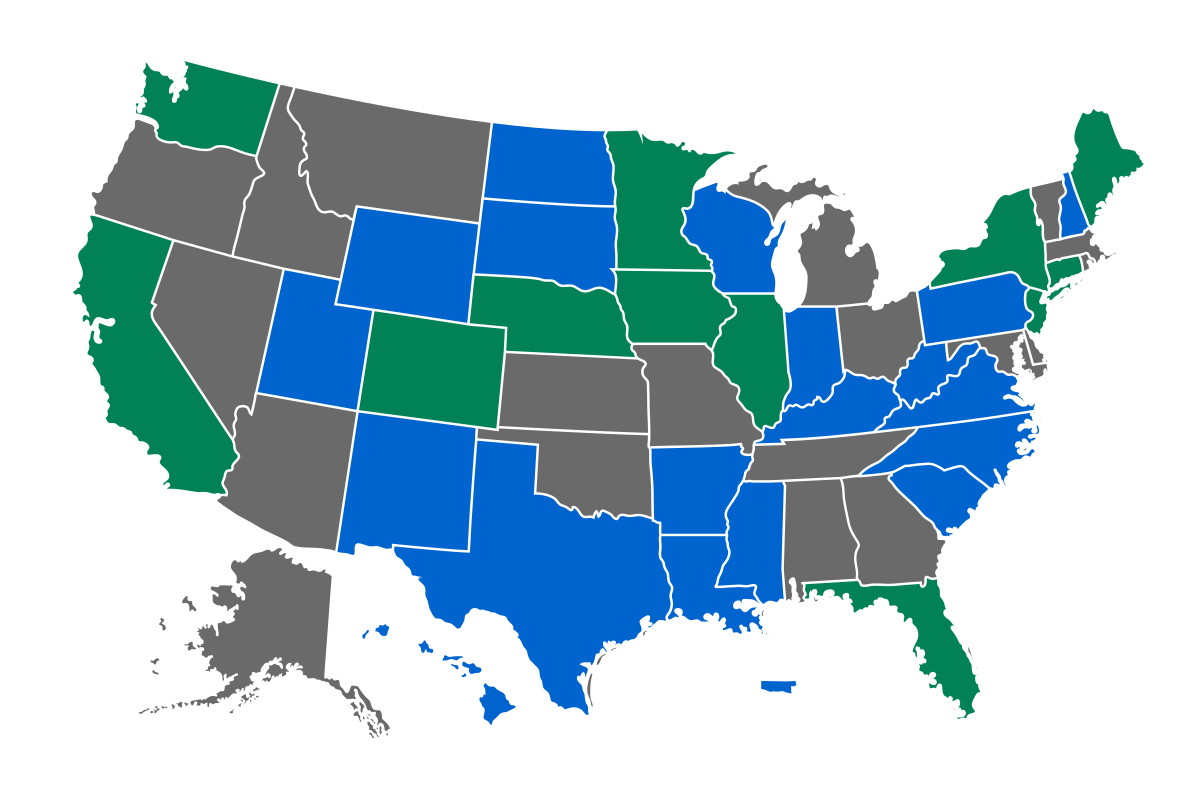
State battery recycling requirements in effect:
Hawaii
Lead Acid Battery Management Law
In Hawaii, Lead-acid batteries may not be placed in mixed municipal solid waste or disposed of except by delivery to a lead-acid battery retailer or wholesaler; collection/recycling facility; or secondary lead smelter. Retailers must accept, at the point of sale, a quantity at least equal to the number purchased of used batteries and must post a notice, at least 5×7 inches, containing the universal recycling symbol and stating:
• “It is illegal to discard a motor vehicle battery or other lead acid battery.”
• “Recycle your used batteries.”
• “State law requires us to accept used motor vehicle batteries or other lead acid batteries for recycling, in exchange for new batteries purchased.”<
• “The price of a new battery includes disposal of your old battery.”
Indiana
Indiana’s Lead Acid Battery Management Law
Retailers that sell lead-acid batteries, the retailer must post a notice, at least 8.5×11 inches, in a visible place for customers a notice that states. Additionally, there is a recycling law for rechargeable batteries with SSLA/Pb.
• “Improper disposal of batteries is against the law.”
• “It is illegal to put used motor vehicle batteries or other vehicle or boat batteries in the trash.”
• “Recycle your used batteries.”
• “State law requires us to accept your used battery for recycling if you purchase a new battery from us.”
Kentucky
Kentucky’s Lead Acid Battery Management Law
Lead-acid batteries may not be placed in mixed solid waste, accepted at landfills or incinerators, or abandoned in any manner other than to deliver to a retailer/wholesaler of lead-acid batteries, a permitted secondary lead smelter or a collection/recycling facility.
Retailers are required to accept on a one for one basis used lead-acid batteries for those purchased and must post a notice at the “place of retail sales that they are required to accept, if offered, a used lead-acid battery for each new battery sold.” Additionally, there is a recycling law for rechargeable batteries with SSLA/Pb.
Louisiana
Louisiana’s Lead Acid Battery Management Law
No person may place knowingly and intentionally a lead acid battery in mixed solid waste, or discard or otherwise knowingly and intentionally dispose of a lead acid battery except by delivery to an automotive battery retailer or wholesaler, to a collection or recycling facility authorized under the laws of Louisiana to collect and recycle lead acid batteries, or to a secondary lead smelter permitted by the Environmental Protection Agency. Additionally, there is a recycling law for rechargeable batteries with SSLA/Pb.
Mississippi
Mississippi’s Lead Acid Battery Management Law
Disposal of a used lead-acid battery in mixed municipal solid waste is prohibited. Lead-acid batteries must be delivered to a lead-acid battery retailer or wholesaler; collection/recycling/or recovered material processing facility; or permitted secondary lead smelter. Retailers must deliver used lead-acid batteries to the agent of a lead-acid battery wholesaler or agent of permitted secondary lead smelter; vehicle battery manufacturer for delivery to permitted secondary lead smelter; collection/recycling/or recovered material processing facility; or a permitted secondary lead smelter. Retailers of lead-acid batteries shall accept in a quantity at least equal to the number of new lead-acid batteries purchased, at the point of sale, used lead-acid batteries offered by customers. Retailers must post a notice at least 8.5×11 inches containing the universal recycling symbol and the following language:
• “It is illegal to discard a motor vehicle battery or other lead-acid battery.”
• “Recycle your used batteries.”
• “State law requires us to accept used motor vehicle batteries or other lead-acid batteries for recycling in exchange for new batteries purchases
Additionally, there is a recycling law for rechargeable batteries with SSLA/Pb.
New Hampshire
New Hampshire’s Rechargeable Battery Management Law
New Hampshire law requires that Ni-Cd and small sealed lead batteries or battery packs identify the manufacturer name. Additionally, there is a recycling law for rechargeable batteries with Small Sealed Lead Acid (SSLA/Pb) and Nickel Cadmium (Ni-Cd).
New Mexico
Lead Acid Battery Management Law
In New Mexico, no person shall dispose of lead-acid batteries at any landfill or incinerator.
North Carolina
North Carolina’s Lead Acid Battery Management Law
Lead-acid batteries are prohibited from placement or disposal in a landfill, incinerator, or any waste-to-energy facility. They should be delivered to a battery retailer or wholesaler; secondary lead smelter; or collection/recycling facility. Battery retailers should deliver used lead-acid battery to the agent of a battery wholesaler or secondary lead smelter; battery manufacturer for delivery to a secondary lead smelter; or collection/recycling facility. Additionally, there is a recycling law for rechargeable batteries with Small Sealed Lead Acid (SSLA/Pb).
North Dakota
Lead Acid Battery Management Law
In North Dakota, lead-acid batteries may not be placed in municipal waste or discarded/disposed of in a landfill. Lead-acid batteries must be accepted as trade-ins for new lead-acid batteries by any person who sells lead acid batteries at retail.
Pennsylvania
Pennsylvania currently does not have state battery regulations in place. The below federal requirements for battery recycling apply in the state of Pennsylvania.
Puerto Rico
Approved January 17, 2012, the “Puerto Rico Electronics Recycling and Disposal Promotion Act” focuses on electronics, especially computers and cellphones. The law appears to obligate the manufacturers of electronics and cellphones to collect and properly dispose of the regulated items, including any batteries contained in those products. Additionally, there are battery disposal requirements for all batteries with the following chemistries:
• Nickel Cadmium (Ni-Cd)
• Nickel Metal Hydride (Ni-MH)
• Lithium Ion (Li-Ion)
• Small Sealed Lead Acid (SSLA/Pb)
• Puerto Rico Electronics Recycling and Disposal Promotion Act
South Carolina
South Carolina’s Lead Acid Battery Management Law
No person shall knowingly place a used small sealed lead-acid battery in mixed municipal solid waste, discard, incinerate or otherwise dispose of a small sealed lead-acid battery, except by delivery to: a small sealed lead-acid battery retailer or wholesaler; a collection/recycling/or recovered material processing facility that is registered with the Department of Health and Environmental Control to accept small sealed lead-acid batteries; or a permitted secondary lead smelter. Retailers must deliver used small sealed lead-acid batteries to: the agent of a lead-acid battery wholesaler or agent of a permitted secondary lead smelter; a small sealed lead-acid battery manufacturer for delivery to a permitted secondary lead smelter; a small sealed lead-acid battery importer for delivery to a permitted secondary lead smelter; a facility designated by a small sealed lead-acid battery manufacturer or importer for delivery to a permitted secondary lead smelter; or a permitted secondary lead smelter. Additionally, there is a recycling law for rechargeable batteries with Small Sealed Lead Acid (SSLA/Pb).
Retailers offering small sealed lead-acid batteries for retail sale in the State must post a notice at least 8.5×11 inches containing the state recycling symbol and the following language:
• “It is illegal to put a small sealed lead-acid battery in the garbage.”
• “Recycle your used small sealed lead-acid batteries.”
South Dakota
South Dakota’s Lead Acid Battery Management Law
Landfills in South Dakota are prohibited from accepting lead acid batteries. Any wholesaler or retailer of lead acid batteries shall accept, on a one for one exchange basis, used lead acid batteries and shall ensure the proper handling and disposal of the batteries. Additionally, there is a recycling law for rechargeable batteries with SSLA/Pb.
Texas
Texas’ Lead Acid Battery Management Laws
Lead acid battery disposal in mixed municipal solid waste is prohibited. Additionally, there is a recycling law for rechargeable batteries with SSLA/Pb.
Lead acid batteries must be delivered to a battery retailer or wholesaler; a secondary lead smelter; or a collection/recycling facility. Retailers must deliver used lead acid batteries to a battery wholesaler, secondary lead smelter, battery manufacturer for delivery to a secondary lead smelter or a collection/recycling facility. Retailers must accept, if offered by each customer, at least 1 but not more than 3 used lead-acid batteries for recycling. Retailers must post a notice, at least 8.5×11 inches, containing the universal recycling symbol and the following language:
• “It is illegal to discard or improperly dispose of a motor-vehicle battery or other lead-acid battery.”
“Recycle your used batteries.”
• “State law requires us to accept used motor-vehicle batteries or other lead-acid batteries for recycling.”
Utah
Utah’s Lead Acid Battery Management Law
In Utah, all lead acid batteries shall be disposed of by delivery to a lead acid battery retailer or wholesaler, collection/recycling facility, or secondary lead smelter. Disposal in any solid waste treatment, storage or disposal facility is prohibited.
Virginia
Virginia’s Lead Acid Battery Management Law
Lead acid batteries shall not be discarded in mixed municipal solid waste or disposed of except by delivery to a battery retailer or wholesaler, secondary lead smelter, or collection facility authorized under the laws of Virginia or the U.S.EPA. Persons selling new lead acid batteries must accept used lead acid batteries in quantity at least equal to the purchase, if offered by customers. Additionally, there is a recycling law for rechargeable batteries with Small Sealed Lead Acid (SSLA/Pb).
West Virginia
Lead Acid Battery Management Law
It is unlawful to dispose of lead-acid batteries in a solid waste landfill in West Virginia.
Wisconsin
Wisconsin’s Lead Acid Battery Management Law
Land disposal or incineration of a lead acid battery is prohibited. Additionally, there is a recycling law for rechargeable batteries with SSLA/Pb. Retailers will be provided with a notice 8.5 x 11 inches stating:
That it is illegal to dispose of a motor vehicle battery or other lead acid battery in a landfill or incinerator
Lead acid batteries should be recycled State law requires retailers to accept lead acid batteries in trade and in some other instances Retailers shall post the notice where it can be seen by consumers.
Wyoming
Lead Acid Battery Management Law
In Wyoming, disposal of a used lead acid battery in mixed municipal solid waste is prohibited. Retailers selling lead batteries are required to accept at least the equal quantity of used batteries as those purchased and must post a written notice at least 8.5×11 inches containing:
• Universal recycling symbol
• “It is illegal to discard a motor vehicle battery or other lead acid battery”
• “Recycle your used batteries”
• “State law requires us to accept used motor vehicle batteries or other lead acid batteries for recycling in exchange for new batteries purchased”
Producers required to offer or fund battery recycling:
California
Under California AB 2440 producers of covered batteries and battery-containing products (with easily removable batteries) sold or offered for sale in California must establish a stewardship program for the collection and recycling of covered batteries. Read the chaptered law.
Under California SB 1215, the Electronic Waste Recycling Act of 2003 will expand the definition of a “covered electronic device” to include “covered battery-embedded products”. Starting January 1, 2026 consumers will be required to pay a waste recycling fee on all “covered battery-embedded products”.
Colorado
Battery Stewardship Act of 2025
Under Colorado’s Battery Stewardship Act of 2025 producers of covered batteries and battery-containing products sold or offered for sale in Colorado must be a member of a Battery Stewardship Organization. As of August 1, 2027 no retailer may sell a covered battery or battery containing product that is not participating in an approved plan.
Connecticut
An Act Establishing Extended Producer Responsibility for Consumer Batteries
Under Connecticut’s the 2025 Act, producers of covered batteries and battery-containing products sold or offered for sale in Connecticut must be a member of a Battery Stewardship Organization by January 1, 2027. As of July 1, 2028 no retailer may sell a covered battery or battery containing product that is not participating in an approved plan.
Florida
Rechargeable Battery Management Law
Municipal solid waste disposal of Ni-Cd and small sealed lead batteries is prohibited. Also, certain government agencies and industrial, communications and medical facilities are required to collect and segregate Ni-Cd and small sealed lead batteries for return to the battery supplier or collection facility designated by the battery or product manufacturer. Manufacturers or distributors must develop and implement battery management program plans for consumer Ni-Cd and small sealed lead batteries and products powered by non-removable batteries of the same type. Call2Recycle® has already implemented its program in the state, and meets these requirements on behalf of its Licensees. Additionally, there is a recycling law for rechargeable batteries with Small Sealed Lead Acid (SSLA/Pb) and Nickel Cadmium (Ni-Cd).
Illinois
Battery Stewardship Act
The Battery Stewardship Act requires producers who sell, offer for sale, or distribute covered batteries or battery-containing products in Illinois to implement and participate in a battery stewardship plan. By January 1, 2026 all obligated producers must participate in an approved battery stewardship plan or they may not sell batteries in the state of Illinois. After January 1, 2028 there is a disposal ban for all portable and medium format batteries in the state. The bill also establishes restrictions on the disposal of covered batteries and provides penalties for violations.
Iowa
Iowa’s Rechargeable Battery Management Law
All “participants in the stream of commerce” relating to Ni-Cd and small sealed lead batteries are individually and collectively responsible for developing and operating a recycling system. Ni-Cd and small sealed lead batteries may not be solid in Iowa unless the required system is in place. Institutional generators are required to provide for the on-site source separation and collection of such batteries.
Ni-Cd and small sealed lead battery manufacturers also must provide a telephone number for consumers to obtain recycling or disposal information. Call2Recycle® has established the “1-800-8-BATTERY” toll-free number that provides this information and operates its program throughout the state. Additionally, there is a recycling law for rechargeable batteries with Small Sealed Lead Acid (SSLA/Pb) and Nickel Cadmium (Ni-Cd).
Maine
Maine’s Rechargeable Battery Management Law
Collection programs must be established for consumer and non-consumer Ni-Cd and small sealed lead batteries. Government agencies and industrial, communications and medical facilities have to collect and segregate such batteries for return to the battery supplier or to a collection facility designated by the battery or product manufacturer. Final suppliers of these batteries are required to inform purchasers of their responsibilities under the law. Additionally, there is a recycling law for rechargeable batteries with Small Sealed Lead Acid (SSLA/Pb) and Nickel Cadmium (Ni-Cd).
Manufacturers of rechargeable batteries are required to establish and maintain a system for the proper collection, transportation and processing of used Ni-Cd and small sealed lead batteries. The Battery Network operates its program throughout the state.
Maryland
Maryland’s Rechargeable Battery Management Law
Under Maryland’s Rechargeable Battery Management Law marketers are required to develop and implement a management program for used Ni-Cd and small sealed lead batteries and products containing non-removable batteries. Call2Recycle® operates its program throughout the state.
Additionally, there is a recycling law for rechargeable batteries with Small Sealed Lead Acid (SSLA/Pb) and Nickel Cadmium (Ni-Cd).
Minnesota
In Minnesota, there is a recycling law for rechargeable batteries with the following chemistries:
• Nickel Cadmium (Ni-Cd)
• Nickel Metal Hydride (Ni-MH)
• Lithium Ion (Li-Ion)
• Small Sealed Lead Acid (SSLA/Pb)
In 1994, Minnesota enacted a rechargeable battery and products law, applying to any nickel-cadmium, small sealed lead acid or any other battery that can be recharged.
• Disposal prohibition. Rechargeable batteries and products with non-removable rechargeable batteries cannot be disposed as mixed municipal waste.
• Collection and management programs. Required the rechargeable battery industry to develop and implement a state-approved collection program as a requirement of selling rechargeable batteries in the Minnesota.
• Sales prohibition. Rechargeable batteries and rechargeable products that do not meet the requirements for collection cannot be sold or distributed for sale in Minnesota. This prohibition applies to manufacturers and resellers. (Minn. Stat. 325E.125)
Nebraska
Nebraska’s Adopt the Safe Battery Collection and Recycling Act of 2025
Under Nebraska’s Adopt the Safe Battery Collection and Recycling Act of 2025 producers of covered batteries and battery-containing products sold or offered for sale in Nebraska must be a member of a Battery Stewardship Organization. As of January 1, 2028 producers are required to comply with the battery disposal ban.
New Jersey
New Jersey’s Rechargeable Battery Management Law
It is illegal to knowingly dispose of Ni-Cd and small sealed lead batteries as solid waste. Manufacturers are required to develop and submit for approval comprehensive management programs for the environmentally sound collection, transportation, recycling or proper disposal of used Ni-Cd and small sealed lead batteries. Institutional and small quantity generators are required to collect and segregate rechargeable Ni-Cd and small sealed lead batteries. Call2Recycle®’s program has been approved by the New Jersey Department of Environmental Protection (NJDEP) to comply with this requirement. Additionally, there is a recycling law for rechargeable batteries with Small Sealed Lead Acid (SSLA/Pb) and Nickel Cadmium (Ni-Cd).
New York
New York State Rechargeable Battery Law
Retailers that sell “rechargeable batteries” are required to collect used batteries of the same type from customers for recycling and post a sign on their premises indicating they do so. The law covers most dry cell, non-vehicular rechargeable batteries weighing less than twenty-five pounds, regardless of chemistry. Disposal of rechargeable batteries as solid waste also is prohibited after December 5, 2011. Battery manufacturers are responsible for developing state approved plans for collecting and recycling batteries at no expense to the consumer or retailer.
The law requires battery collection by both local retailers and direct sellers of rechargeable batteries (i.e., catalog, telephone, or internet sales). Smaller food stores that sell rechargeable batteries explicitly are not required to collect used batteries.
Non-compliance with these requirements is subject to potential civil penalties of up to five thousand dollars.
Additionally, there is a recycling law for rechargeable batteries with the following chemistries:
• Nickel Cadmium (Ni-Cd)
• Nickel Metal Hydride (Ni-MH)
• Lithium Ion (Li-Ion)
• Small Sealed Lead Acid (SSLA/Pb)
Vermont
Product Stewardship For Primary Batteries and Rechargeable Batteries
As of January 1, 2026, this Act replaced the Vermont Primary (Single-Use) Battery Law. This Act amends the single-use law by adding portable and medium format batteries, both single-use and rechargeable chemistries. Starting January 1, 2026, all obligated producers for both rechargeable and primary must participate in an approved battery stewardship plan or they may not sell batteries in the state of Vermont.
Washington
Washington SB 5144 Providing For Responsible Environmental Management of Batteries
Under Washington SB 5144 producers of covered batteries and battery-containing products sold or offered for sale in Washington must be a member of a Battery Stewardship Organization. As of January 1, 2027 for portable batteries and as of January 1, 2029 for medium format batteries producers are required to comply with the battery disposal ban.
Washington DC
Washington DC’s Zero Waste Omnibus Amendment Act of 2020
Under Washington DC’s Zero Waste Omnibus Amendment Act of 2020 producers of covered batteries and battery-containing products sold or offered for sale in the District must be a member of a Battery Stewardship Organization. As of January 1, 2022 producers are required to comply with the battery disposal ban.
No battery recycling requirements:
Alabama
Alabama currently does not have state battery regulations in place. The below federal requirements for battery recycling apply.
Alaska
Alaska currently does not have state battery regulations in place. The below federal requirements for battery recycling apply.
Arizona
Arizona currently does not have state battery regulations in place. The below federal requirements for battery recycling apply.
Delaware
Delaware currently does not have state battery regulations in place. The below federal requirements for battery recycling apply.
Georgia
Georgia currently does not have state battery regulations in place. The below federal requirements for battery recycling apply.
Idaho
Idaho currently does not have state battery regulations in place. The below federal requirements for battery recycling apply.
Kansas
Kansas currently does not have state battery regulations in place. The below federal requirements for battery recycling apply.
Massachusetts
Massachusetts currently does not have state battery regulations in place. The below federal requirements for battery recycling apply.
Michigan
Michigan currently does not have state battery regulations in place. The below federal requirements for battery recycling apply.
Missouri
Missouri’s Lead Acid Battery Management Law
Retailers of lead-acid batteries shall accept in a quantity at least equal to the number of new lead-acid batteries purchased, at the point of sale, used lead-acid batteries offered by customers. Retailers must post a notice at least 4×6 inches containing the universal recycling symbol and the following language:
• “It is illegal to discard a motor vehicle battery or other lead-acid battery.”
• “Recycle your used batteries.”
• “State law requires us to accept used motor vehicle batteries, or other lead-acid batteries for recycling, in exchange for new batteries purchased.”
Lead acid battery disposal in mixed municipal solid waste is prohibited. Additionally, there is a recycling law for rechargeable batteries with SSLA/Pb.
Montana
Montana currently does not have state battery regulations in place. The below federal requirements for battery recycling apply.
Nevada
Nevada currently does not have state battery regulations in place. The below federal requirements for battery recycling apply.
Ohio
Ohio currently does not have state battery regulations in place. The below federal requirements for battery recycling apply.
Oklahoma
Oklahoma currently does not have state battery regulations in place. The below federal requirements for battery recycling apply.
Oregon
Oregon currently does not have state battery regulations in place. The below federal requirements for battery recycling apply.
Rhode Island
Rhode Island currently does not have state battery regulations in place. The below federal requirements for battery recycling apply.
Tennessee
Tennessee currently does not have state battery regulations in place. The below federal requirements for battery recycling apply.
Federal Requirements
for Battery Recycling
As battery stewardship regulations become more common in the United States, The Battery Network helps battery and product manufacturers fulfill recycling requirements in the U.S., including compliance with extensive state and federal regulations, such as the Mercury-Containing and Rechargeable Battery Act (The Battery Act). The Battery Network works with these agencies to ensure safety and compliance are top priority.
In the U.S., federal law requires, with certain exceptions, used nickel cadmium (Ni-Cd) and small sealed lead acid (Pb) batteries to be managed as Universal Waste (40 CFR Part 273). The Universal Waste Rule prohibits handlers (e.g., contractors) from disposing of waste Ni-Cd and Pb batteries and further indicates that these batteries must be sent for recycling.