
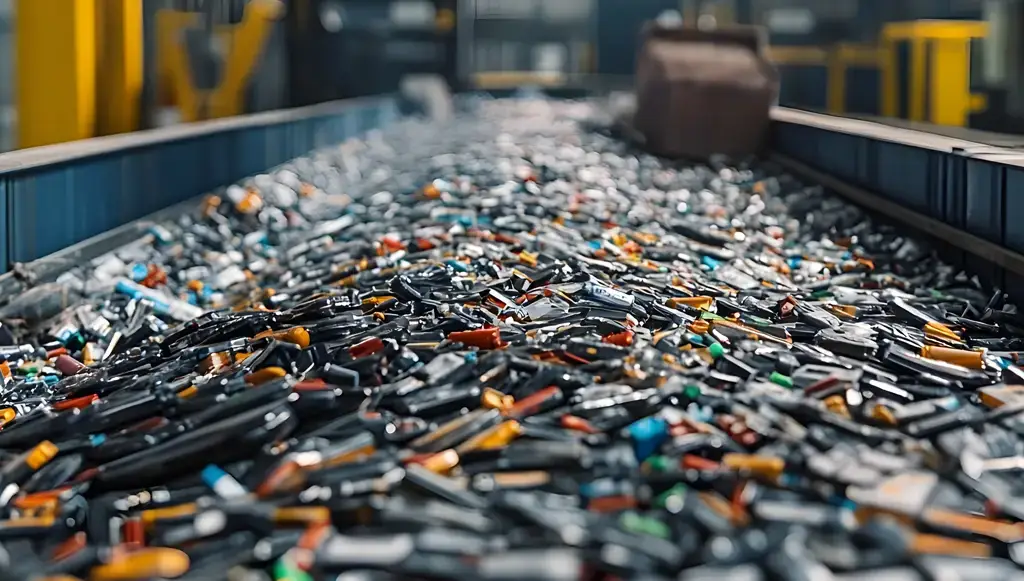
Battery collection volumes are climbing.
Here is what that means for your bottom line and your team’s safety.
If your facility collects used batteries, you already know the basics: tape the terminals or individually bag the batteries, prep the boxes, wait for pickup. It works. But as end-of-life battery volumes grow and chemistry types evolve to more energy dense batteries like lithium-ion, that familiar process carries costs that do not always show up on a budget line. They show up in labor hours, safety incidents, compliance headaches, and operational friction. The kind of things that are easy to overlook until it becomes impossible to ignore.
This is not a problem that is going away. Battery use is accelerating across nearly every product category. Americans buy and discard billions of consumer batteries every year, and rechargeable formats, including lithium-ion cells in power tools, laptops, mobile phones, and countless other devices, are entering the waste stream at a growing rate. For facilities already managing high collection volumes, the operational pressure is real, and it is compounding.
Understanding where those hidden costs show up in real day-to-day operations is the first step toward doing something about them.
Where The Hours Actually Go
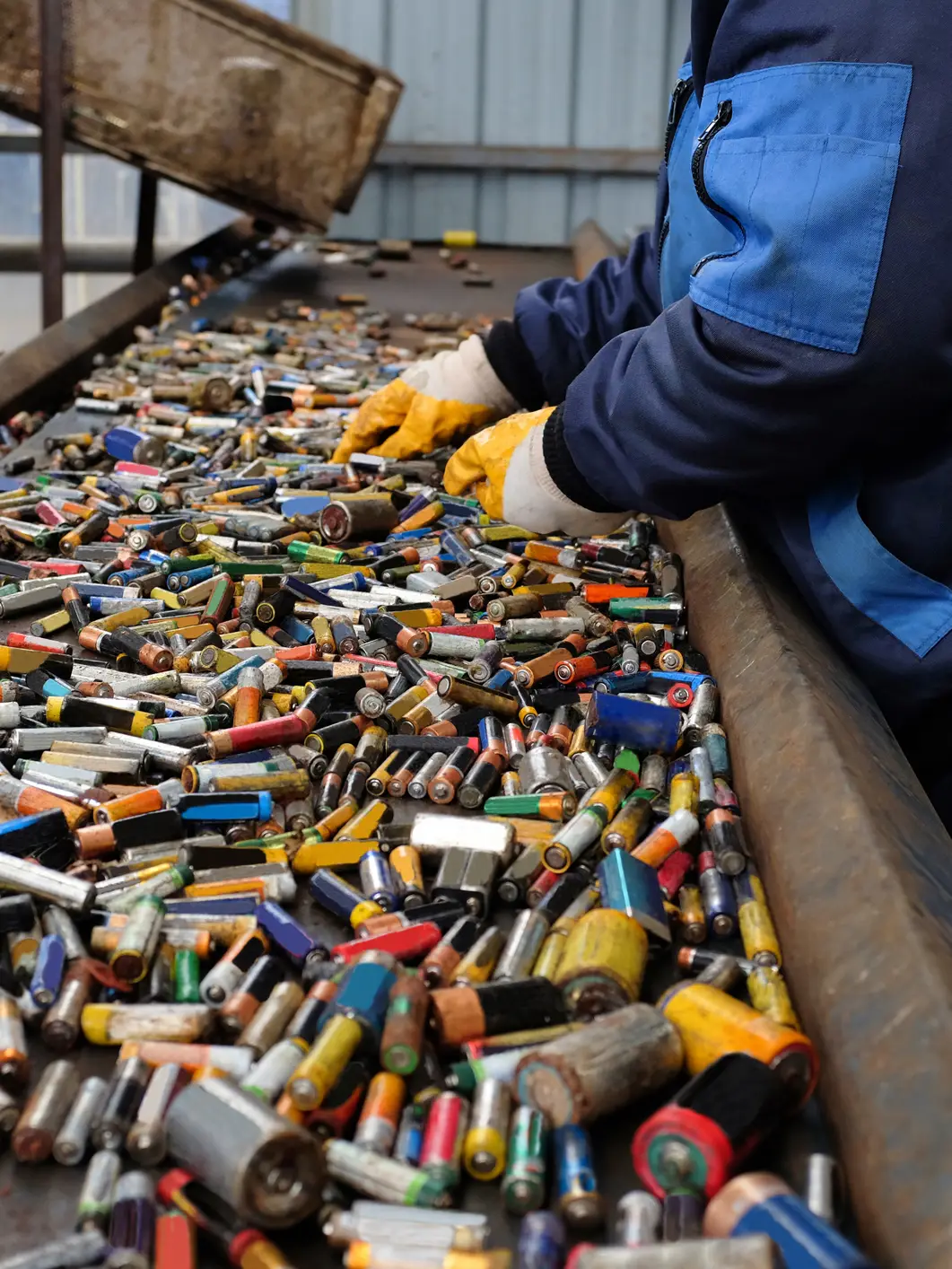
Ask any operator where battery collection eats up time and the answer is almost always the same: safely prepping the batteries for shipping. Traditional collection programs require staff to protect the terminals by bagging or taping each battery, fill and seal collection boxes, stage those boxes for pickup, and track when each container is ready to go. For a low-volume site, that is a manageable task. For a facility handling significant battery tonnage, it can consume a substantial portion of the work week.
When you break down the time required to sort, protect each terminal, prepare, and process batteries through a conventional box-based collection system, the hours add up fast for large volume generators. And unlike other facility costs, these scale directly with volume. More batteries in means more labor out.
The friction extends beyond the prep work itself. Every new staff member needs to be trained on battery identification, sorting, and terminal protection requirements. High turnover means those training cycles repeat constantly. For facilities where labor is already stretched thin, that reallocation matters.
Sites handling upward of 2,000 pounds of batteries per year are especially likely to feel this strain. At that threshold, the inefficiencies of a manual, box-based system tend to become visible in ways they were not before.
Compliance Complexity Quietly Grows
Battery collection is a regulated activity. Terminal protection requirements, chemistry segregation rules, and packaging standards all exist for good reason. But they also mean that every person who touches a battery in your collection process needs to understand what is required in the regulations and be able to execute it consistently.
That is easier said than done when the battery types coming through your doors are increasingly diverse. Both the FBI and Underwriters Laboratories have independently flagged the growing prevalence of counterfeit lithium-ion batteries on the U.S. market, products that have not undergone standard safety testing and may have unknown or unstable chemistries. The result is a compliance picture that is harder to manage than it used to be.
The requirements extend further than most operators expect. Staff also need to know how to identify and handle damaged, defective, or recalled batteries, understand watt-hour thresholds that affect how certain lithium batteries must be classified and shipped, and maintain current Department of Transportation (DOT) and hazmat certifications. Each of those is a training cost, and in facilities with turnover or limited dedicated staff, it is an ongoing one.
The risk of a compliance gap—whether a battery was not terminally protected, a box was improperly packed, or a damaged cell was not handled correctly—is not just a procedural problem. It is a liability. Add in the documentation and reporting requirements that vary by location and program along with the administrative overhead becomes a hidden cost of its own. Facilities that can simplify their intake process by reducing the number of decisions staff have to make at the point of collection naturally reduce their exposure. Fewer judgment calls mean fewer opportunities for error and mitigates safety risk.
The regulatory picture adds another dimension. Although federal rules under the Resource Conservation and Recovery Act (RCRA) do not fully cover lithium-ion batteries in municipal waste, that does not mean facilities are without exposure. Occupational Safety and Health Administration’s (OSHA) General Duty Clause allows known hazards without reasonable mitigation to become the basis for enforcement. Industry groups including Solid Waste Association of North America (SWANA) and National Waste and Recycling Association (NWRA) are actively pushing for greater attention to recognized safety controls, which means the bar for what counts as a known hazard is rising. Facilities that have not taken steps to address lithium-ion risks at the point of collection may find that position harder to defend over time.
The Safety Risk Is Not Hypothetical
Lithium-ion battery fires at waste and recycling facilities are no longer a rare occurrence. They are a documented, growing trend. Publicly reported fires at Materials Recovery Facilities (MRF) and transfer stations increased by 20% in 2024 over the prior year, according to Fire Rover’s annual waste and recycling facility fire report, the highest yearly figure since the company began tracking in 2016. In 2025, reported incidents hit a record 448 across the U.S. and Canada.
5,000
The NWRA estimates that more than 5,000 fires occur annually at recycling facilities, and its research found the rate of catastrophic fire losses has risen by 41% over a five-year period. The financial toll is significant: the 448 fires reported in 2025 caused an estimated $2.5 billion in damage across the industry.
Lithium-ion batteries that are improperly stored, punctured, or subjected to physical stress can enter thermal runaway, a chain reaction that generates intense heat and is notoriously difficult to extinguish. A battery that arrives at a collection point with a compromised cell, or one that gets jostled during transport, is a potential ignition source.
Battery collection sites that handle mixed battery chemistries in close proximity, without purpose-built containment, are carrying more risk than they may realize. What you do with batteries at the point of collection has a direct impact on the safety of your facility and the people in it. The good news is that the risk is manageable.
Volume Is Only Going Up
None of these pressures are static. The consumer battery market is projected to grow at a compound annual rate of roughly 7.7% through 2035. Lithium-ion chemistries are leading that growth, driven by portable electronics, power tools, and the expanding range of rechargeable household devices. The result is a waste stream that is getting more energy dense, more chemically varied, and less forgiving of collection processes that were designed for a simpler era.
The shift is already visible at collection sites that have seen their incoming volumes climb year over year. What worked at 500 pounds of batteries annually is a different proposition at 2,000+ pounds. The facilities that are thinking ahead about collection infrastructure are the ones that will be positioned to manage that growth without proportional increases in labor cost, compliance risk, and safety exposure.
What Operators Are Doing About It
The most effective response to these compounding pressures is to reduce complexity at the point of collection. That means moving away from systems that require chemistry sorting, terminal taping, and multi-box management, and toward consolidated approaches that let staff accept batteries quickly, compliantly, and safely without extensive decision-making at intake.
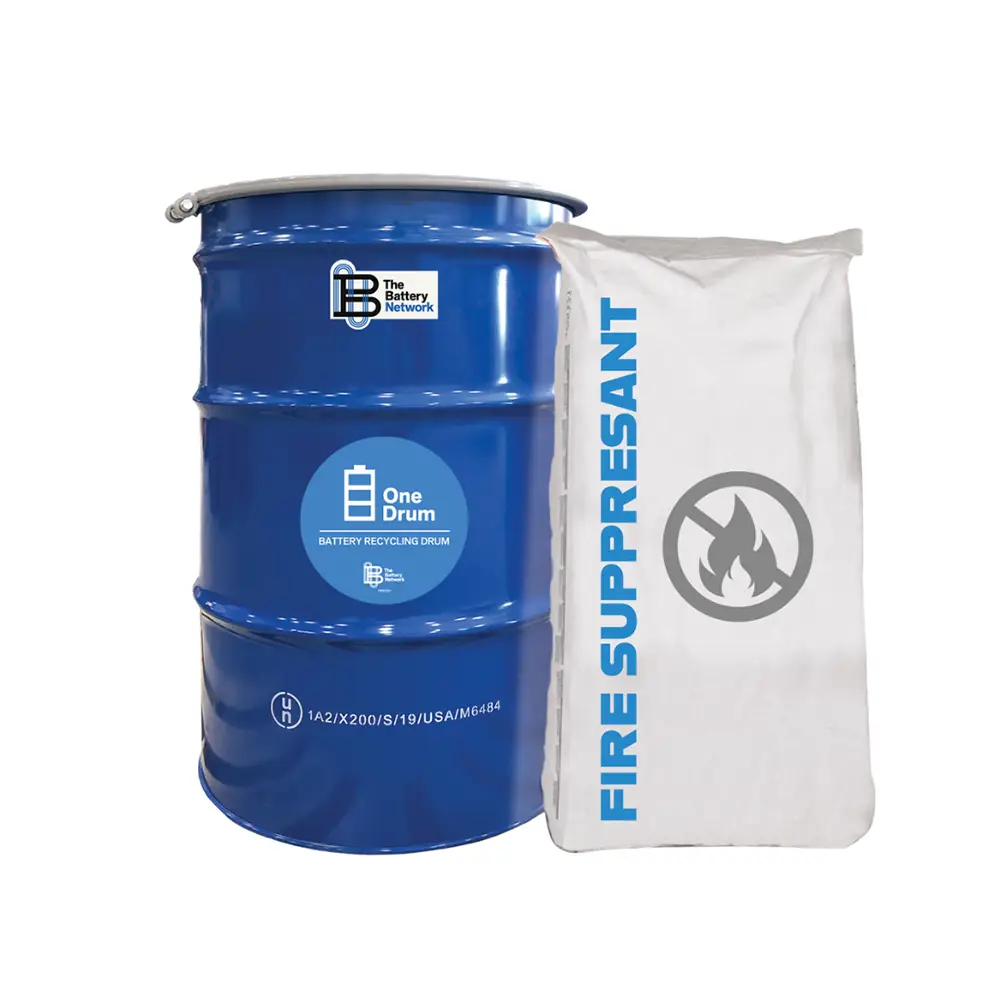
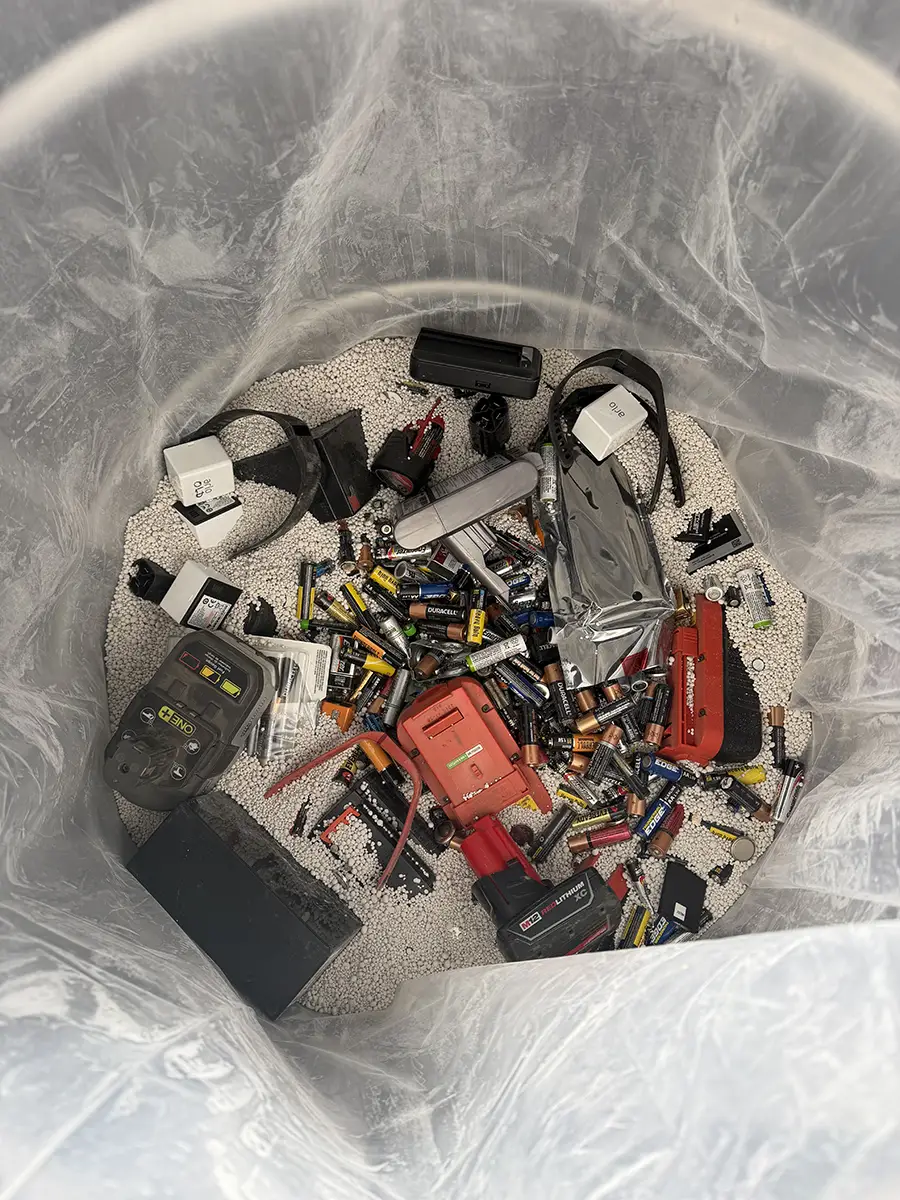
One example gaining traction is OneDrum™, a high-capacity drum-based collection system from The Battery Network designed specifically for end-of-life consumer batteries. Unlike traditional collection boxes that require individual battery preparation, OneDrum™ accepts most consumer battery types in a single container without sorting or terminal protection requirements. From collection to transport, the goal is to make safe battery recycling possible without burdening the people responsible for managing it. Time studies have shown the difference to be significant: processing 25 gallons of mixed batteries the traditional way—sorting, identifying, and applying terminal protection before boxing—required a team of four roughly 30 minutes to complete. The same volume with OneDrum™ took one person 20-30 minutes, with no sorting or terminal protection required. Early adopters have reported labor savings of up to 90% on battery preparation.
That kind of reduction does not just save time. It changes what that time can be used for. A team that used to spend the better part of a workday on battery prep can redirect that capacity toward higher-value work. For facility managers watching labor costs closely, that math is worth running.
The safety case is equally compelling. Systems that contain batteries in purpose-built, UN-certified enclosures reduce the open-handling time during which cells are most vulnerable to damage. Fewer touchpoints mean fewer opportunities for a compromised cell to cause a problem.
Compliance benefits follow the same logic. When staff do not need to make sorting decisions, training requirements shrink, and the risk of a shipment prep error also decreases. For facilities navigating the growing scrutiny around lithium-ion handling, a system like OneDrumTM provides more than operational efficiency. A purpose-built, documented collection process is also a stronger position to be in as an end-of-life battery collection site.
The Bottom Line
Battery collection has always had operational costs. As battery volumes increase, the question becomes whether these costs are being measured, or quietly accumulating in labor, safety, and compliance risks.
As volumes grow, the gap between a well-optimized collection process and a legacy one gets wider. Facilities that take a hard look at where their battery takeback programs actually spend labor and carry risks are finding that the improvements are larger than they expected, and that the case for change is not hard to make once the full picture is on the table. Safe battery recycling starts with you and with the systems you put in place to support it.