
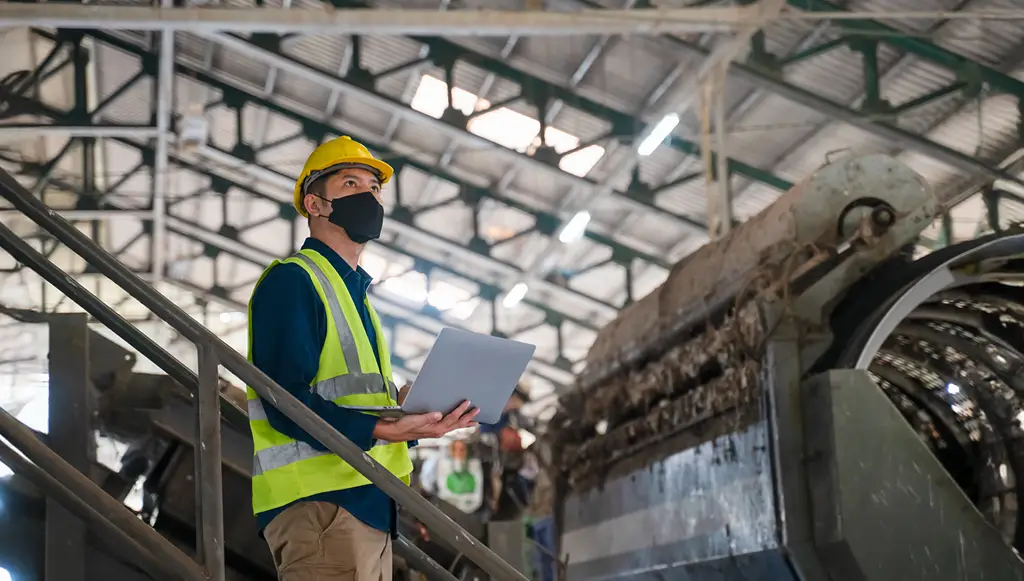
6 Practical Strategies for Haulers, Material Recovery Facilities, and Landfills
Batteries power an expanding range of everyday products, from phones and power tools to e-bikes, toys, and personal electronics. When those batteries end up in household trash or curbside recycling, they do not stay contained. They travel through collection vehicles and processing equipment, where compaction, crushing, puncturing, or heat can trigger a serious safety incident.
The U.S. Environmental Protection Agency (EPA) warns that batteries discarded in household trash or curbside recycling can start fires throughout the municipal waste management system, threatening workers, first responders, and surrounding communities. The Solid Waste Association of North America (SWANA) similarly identifies batteries, particularly lithium-ion batteries, as a significant challenge across collection, recycling, and disposal operations.
The scale of the problem is hard to pin down exactly, since reporting practices vary and many incidents go undocumented. Still, a National Waste & Recycling Association (NWRA) and Resource Recycling Systems (RRS) report estimated that more than 5,000 fires occur annually at recycling facilities, with improperly discarded lithium-ion batteries identified as a growing contributor.
No hauler or facility can prevent every misplaced battery from entering the waste stream. But every stage, from curbside collection to the tip floor to the baler, provides an opportunity to reduce the risk of a battery-related fire.
Battery Safety Is a Layered Effort, Not a Single Fix
Battery-related incidents rarely result from a single failure. They occur when a battery is improperly discarded, warning signs are missed, or a facility isn’t prepared to respond. Reducing that risk requires safeguards at every stage of the waste stream; from educating consumers and training drivers to equipping Material Recovery Facilities (MRFs), transfer stations, and landfills with clear procedures for safely managing batteries.
No single organization can address this challenge alone. Manufacturers, stewardship organizations, haulers, recyclers, regulators and industry associations each play an important role. Organizations including the EPA, NWRA, SWANA and the Recycled Materials Association (ReMA) have developed guidance to help improve battery safety, and The Battery Network contributes through more than 30 years of experience managing battery collection, recycling and stewardship programs across the United States.

1. Keep Batteries Out of the Waste Stream Whenever Possible
For residential haulers, the greatest opportunity usually comes before the cart reaches the truck.
Drivers cannot realistically stop and inspect every waste or recycling container for loose batteries or battery-powered products. Building a safety program around that expectation would be impractical and unlikely to prevent most incidents.
Instead, haulers and municipalities can focus on upstream measures such as:
- Clear customer education explaining that batteries do not belong in trash or curbside recycling
- Consistent prohibited-material language in service agreements
- Information about approved battery recycling locations
- Cart tags, bill inserts, digital reminders, and seasonal outreach
- Coordination with local or statewide battery take-back programs
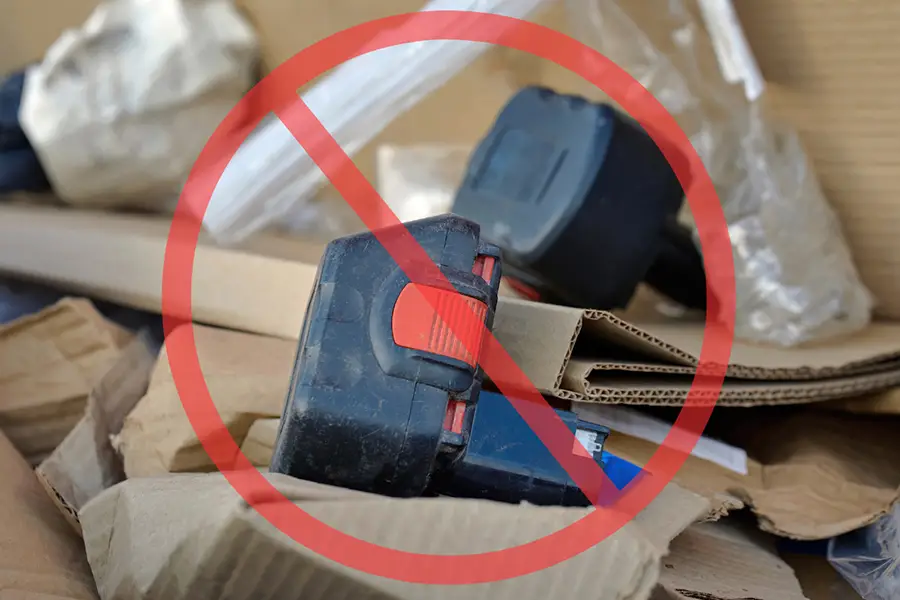
Industry guidance, including the lithium-ion battery management guide from NWRA, ReMA, and SWANA, recommends clear contractual language stating that lithium-ion batteries are not accepted in residential waste or recycling bins, along with defined responsibility for curbside education. Define where batteries can go, then make sure people actually know it. Accessible take-back programs and consistent public education are among the strongest ways to keep batteries out of waste and recycling infrastructure. Accessible take-back programs and consistent public education are among the strongest ways to keep batteries out of waste and recycling infrastructure.
For MRFs, transfer stations, and landfills, prevention may also include:
- Publishing clear material acceptance and prohibited-material policies
- Communicating requirements to suppliers, customers, and contracted haulers
- Inspecting inbound material where operationally feasible
- Separating identified batteries and battery-containing products from normal processing
- Creating contingency plans for disruptions that cause material to accumulate
Reducing battery hazards before they ever reach processing equipment is the single most effective lever any operation has. Everything else on this list is damage control.
2. Recognize Battery Hazards Before They Escalate
Because batteries are often hidden inside products, detection cannot depend on recognizing loose cells alone. Employees should also be familiar with common battery-containing items and the areas where those items are most likely to be damaged.
Battery incidents tend to cluster around a few points in the process:
- Truck-load dumping
- Waste reception areas and tipping floors
- Feed conveyors and drums
- Screens and other impact points
- Shredders
- Balers
- Loose-material and bale storage
- Loaded-truck storage

Any area where material is compacted, dropped, crushed, or exposed to friction can create conditions in which an improperly discarded battery is damaged.
At MRFs, employees working the tip floor, pre-sort lines, and other recovery points should be trained to recognize batteries and common battery-powered products. Detection technology, including heat-monitoring systems, may add another layer of protection where it fits the facility.
For haulers, detection is more likely to happen after material has already entered the vehicle. Drivers should know how to recognize signs of a developing incident, stop work, and follow company emergency procedures. They should not be expected to search through or manually handle an active load.
For transfer stations and landfills, trained employees may have opportunities to identify batteries during load dumping or material movement, but those opportunities vary significantly by site. Detection practices should reflect actual workflows rather than depend on unrealistic inspection expectations.
3. Know When a Battery Requires Special Handling
Not every battery recovered by a facility presents the same level of risk. An intact battery found before processing is a different situation than one that is swollen, overheating, leaking, smoking, or physically damaged.
Common warning signs of a damaged or defective (DD) battery include:
- Swelling or bulging
- Overheating
- Smoke or vapor
- A burning odor
- Cracks, punctures, or leaks
Warning Signs: When a Battery Is Not Safe
 1. Swelling/Bulging
 2. Overheating
 3. Smoke/Vapor
 4. Burning Smell
 5. Cracks/Leaks
Employees who observe these signs should follow the facility’s damaged battery procedures and avoid placing the battery into a standard battery collection container or the normal recycling stream.
DD batteries require special handling and should never be placed in trash, curbside recycling, or standard collection boxes. Terminals should be protected from contact with other batteries or metal, and facilities should have both temporary and long-term storage procedures worked out in advance, not improvised in the moment.
Operations that recover batteries should establish ahead of time:
- Where intact batteries will be placed
- Where potentially damaged batteries will be isolated
- Which employees are trained to handle them
- What supplies and personal protective equipment are required
- When a battery recycling or incident-support partner should be contacted
- How batteries will be packaged and transported in accordance with applicable requirements
A battery should not be moved simply to clear a production area if the employees doing the moving have not been trained to handle it safely.
4. Prepare Before an Incident Disrupts Operations
The most effective response to these compounding pressures is to reduce complexity at the point of collection. That means moving away from systems that require chemistry sorting, terminal taping, and multi-box management, and toward consolidated approaches that let staff accept batteries quickly, compliantly, and safely without extensive decision-making at intake.
Prevention and detection reduce risk, but they cannot guarantee that an incident will never happen. Every operation needs a written, site-specific response plan.
The NWRA, ReMA and SWANA MRF guide recommends integrating battery procedures with the facility’s emergency action plan and fire prevention plan, along with routine inspections, preventive equipment maintenance, clear access and evacuation routes, properly maintained suppression systems, and designated responsibilities.
A practical plan should address:
- Who has authority to stop equipment or operations
- How employees report a suspected battery incident
- When employees should evacuate
- How personnel will be accounted for
- Who contacts emergency services
- How access will be provided to first responders
- How affected material will be isolated after the immediate emergency
- How the incident will be documented and reviewed
- How operations will continue or safely shut down during an extended disruption
The response should fit the operation. A route driver, an MRF supervisor, and a landfill equipment operator face very different conditions, so a single generic procedure is unlikely to be adequate.
Review material storage practices where applicable, maintain fire breaks where appropriate, and ensure suppression equipment is available and functional. Regular drills and facility reviews can help determine whether plans hold up under actual operating conditions.
Employees should only perform incident-response activities for which they have been trained and authorized. Emergency procedures should be developed with qualified safety professionals and local first responders, not built from general battery advice.
5. Make Compliance Part of Your Safety Program
Battery recovery is not only a safety issue. It can also create waste-management and transportation responsibilities.
The EPA states that most discarded lithium-ion and lithium primary batteries are likely to exhibit hazardous characteristics because of ignitability and reactivity. Non-household generators are responsible for determining whether their discarded batteries are hazardous waste and managing them accordingly. Both rechargeable lithium-ion and primary lithium batteries can also be managed under federal universal waste requirements.
Requirements can vary based on:
- The source and condition of the batteries
- How much universal waste is accumulated
- Storage duration
- Labeling and employee training
- The destination receiving the batteries
- State hazardous-waste requirements
- U.S. Department of Transportation (DOT) shipping regulations
Facilities that intentionally collect or accumulate batteries should work with their environmental, health, and safety teams and qualified service providers to confirm which requirements apply, since state rules can be more stringent than the federal baseline.

6. Build a Culture of Battery Safety
Battery education is sometimes treated as a public-relations activity. For waste and recycling operations, it is also a form of risk prevention.
Consistent communication reduces the number of batteries that enter trucks and facilities in the first place. Training helps employees recognize hazards earlier. Coordination with fire departments improves response time and cuts down on confusion during an emergency.
Building this kind of culture is not a new idea, and it does not need to be complicated to work. Regular training and drills. Real relationships with the local fire department, not just a number in a binder. Site visits and joint exercises before an incident happens, not during one, so responders already know the facility layout, equipment, hazards, and emergency plans.
Education should extend across three groups:
Employees
who need role-specific training and clear procedures
Customers and residents
who need simple disposal instructions
Emergency responders
who need familiarity with the site and its risks
Battery Safety Requires an Industry-Wide Effort
Battery risk does not look the same across the waste stream.
Manufacturers, retailers, consumers, haulers, MRFs, transfer stations, landfills, emergency responders, industry associations, and battery stewardship organizations all have a role to play in reducing battery-related risks.
No single strategy eliminates every incident. But organizations can meaningfully reduce operational risk by combining practical employee training, clear operating procedures, public education, and strong partnerships across the industry.
As battery-powered products become more common, building multiple layers of protection across the waste stream will only matter more, for the workers running this equipment, the communities surrounding these facilities, and the operations that depend on both staying safe.
Battery safety starts long before a battery reaches a recycling facility and depends on every part of the recycling system working together. By adopting these six best practices, MRFs and other recycling facilities can reduce fire risk while helping create a safer, more effective battery recycling network for everyone.