

For manufacturers, OEMs, and brands that sell batteries or battery-powered products in the United States, extended producer responsibility (EPR) is becoming an increasingly important part of doing business.
Battery EPR laws are expanding across the country, bringing new requirements for how batteries are collected, recycled, funded, and reported at end-of-life. Federal law already addresses certain rechargeable batteries, including nickel-cadmium and small sealed lead-acid batteries, but there is no single national EPR program governing the full range of batteries sold in the United States. Instead, newer requirements are largely developing state by state, often covering additional battery chemistries, formats, and products.
That combination of rapid growth and regulatory variation is making battery EPR compliance a growing priority for companies that place batteries and battery-containing products on the U.S. market.
So, what exactly is battery EPR, why is the landscape changing so quickly, and what does that mean for producers?
What is extended producer responsibility (EPR)?
EPR is a policy approach that extends a producer’s responsibility beyond the sale of a product to include how that product is managed at end-of-life.
The U.S. Environmental Protection Agency (EPA) describes EPR as an approach that gives producers financial or physical responsibility for a product throughout its lifecycle, including the management of post-consumer products.
In practice, EPR shifts more responsibility for end-of-life product management from consumers and local governments to the companies that place those products on the market.
Different EPR laws cover different products, including packaging, electronics, paint, mattresses, tires, and increasingly, batteries.
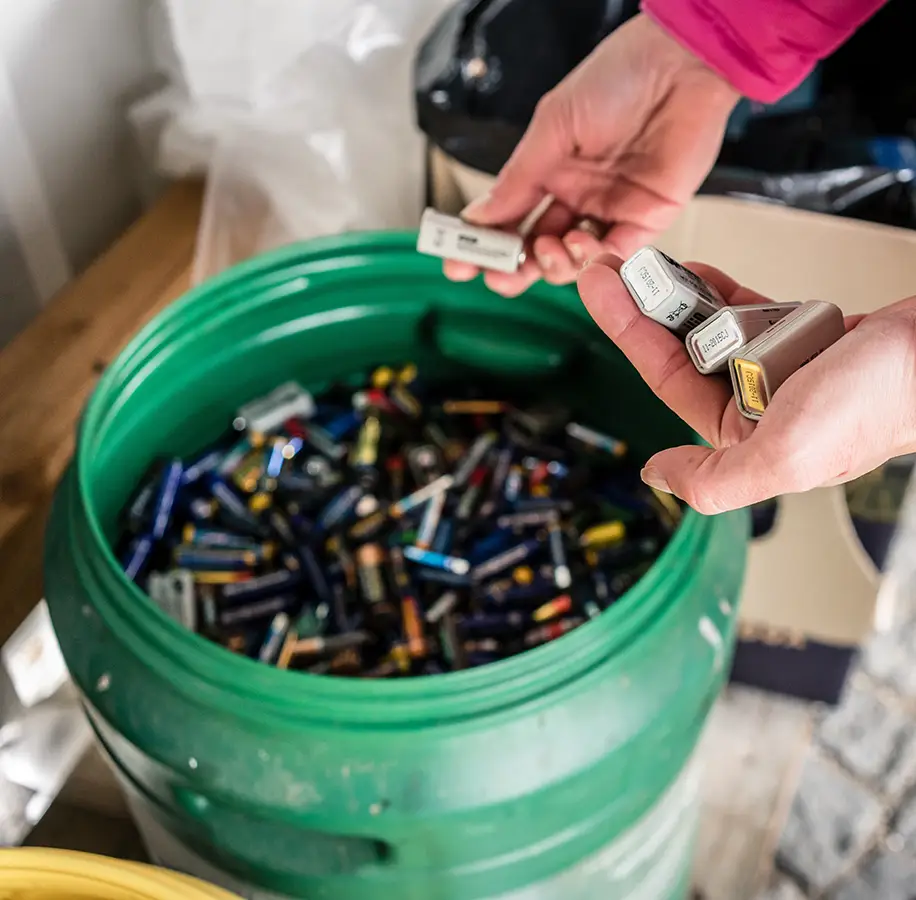
What is battery EPR?
Battery EPR applies the extended producer responsibility model specifically to batteries and products that contain batteries.
Under a battery EPR law, an obligated producer is required to participate in and help fund an approved system for collecting and recycling covered batteries.
Those systems can include:
- Consumer education and outreach
- Accessible battery collection locations
- Transportation and logistics
- Battery sorting and recycling
- Program performance measurement
- Regulatory reporting
- Producer reporting and funding
Which batteries fall under the law and which companies are responsible can vary by jurisdiction. That is where battery EPR can become complicated for companies selling across multiple markets.
Why battery EPR requirements vary by state
One of the biggest challenges for manufacturers and brands is that battery EPR requirements are not uniform across the United States. Definitions of covered batteries, obligated producers, exemptions, reporting requirements, and other program elements can vary by jurisdiction.
A state law may distinguish between factors such as:
- Rechargeable and primary (single-use) batteries
- Battery weight
- Watt-hours
- Loose or removable batteries
- Batteries contained in certain products
- Specific product categories or exemptions
EPA has identified these differences as a key part of the national battery EPR discussion. Its work with the U.S. Department of Energy is examining covered batteries and products, producer responsibilities, reporting, collection and recycling infrastructure, cost structures, transportation, and other program elements.
For companies selling products nationally, the right question is often not simply, “Are batteries regulated?”
It is: “Which of our batteries or battery-containing products fall under the law, where are they covered, and what are we required to do in each jurisdiction?”

Why is battery EPR expanding so quickly?
Several forces are accelerating the growth of battery EPR in the United States:
- Growing battery use
- Greater attention to waste-stream risks
- Increased focus on material recovery
- More state experience with EPR programs
Batteries are in more products than ever
Batteries now power an enormous range of products, from small household electronics and power tools to lawn equipment, e-bikes, and mobility products.
As battery use increases, so does the volume and variety of batteries eventually entering the waste and recycling stream. Policymakers are looking more closely at how those batteries are collected and managed at end-of-life.
That is helping move battery stewardship from a relatively specialized issue to a broader product compliance consideration.

Battery risks in the waste stream are receiving greater attention
Batteries require different handling than many materials found in household waste and recycling systems.
In particular, lithium-ion batteries that enter traditional waste and recycling streams can create significant risks during collection, transportation, sorting, and processing. Dedicated battery collection and recycling systems help keep batteries out of waste streams that were not designed to handle them.
As the volume of battery-powered products grows, states are increasingly examining who should be responsible for building and funding those systems. The EPA has also identified improving safety across the waste management and recycling industry as an important benefit of stronger battery collection and recycling systems.
Material recovery is becoming more important
End-of-life batteries also contain materials that can be recovered through recycling and returned to the supply chain.
That has made battery recycling part of a larger national conversation around resource recovery and critical materials. The EPA and U.S. Department of Energy are developing a voluntary battery EPR framework addressing recycling goals, cost structures, reporting, product design, collection models, and transportation. The agencies have also connected this work to increasing the recycling and recyclability of critical minerals and materials.
In other words, battery policy is increasingly connected both to managing batteries responsibly at end-of-life and to recovering materials that can be put back to use.

States are building on one another’s experience
In the United States, battery EPR requirements are largely developing through state policy.
As more battery EPR programs take effect, states have a growing body of real-world approaches to draw from when developing new legislation. Existing programs offer examples of how producer definitions, collection requirements, performance goals, covered battery types, and reporting structures can be designed.
That can accelerate the development of new legislation, but it does not necessarily create uniformity. States may borrow concepts from one another while still adopting different definitions, exemptions, timelines, and performance requirements.
As a result, the battery EPR landscape can expand quickly while becoming more complex at the same time.
For national brands, the core challenge is simple: products move through a national marketplace, while battery EPR requirements are largely state specific.
What can battery EPR require from producers?
Once a company determines that it is an obligated producer, compliance can involve much more than registering with a state. The exact requirements depend on the law and program, but producer responsibilities may include:
- Identifying applicable batteries or battery-containing products
- Participating in an approved stewardship program
- Reporting the amount and types of covered batteries placed on the market
- Funding collection, transportation, recycling, education, and other program activities
- Maintaining product and sales data needed for regulatory reporting
- Meeting program-specific deadlines, fees, and other compliance requirements
Understanding those obligations starts with a few key questions:
Who is considered the producer?
The legally responsible party is not always synonymous with the battery manufacturer. Depending on the law and supply chain, producer definitions may consider the manufacturer, brand owner, licensee, importer, or another party that places the product on the market. Companies need to understand how each applicable law defines the obligated producer and where responsibility falls within their business relationships.
Which batteries or products fall under the law?
Battery chemistry, size, weight, watt-hours, format, removability, product type, and specific exemptions can all affect coverage. For companies with broad product portfolios, this may require evaluating individual product categories or SKUs rather than making one assumption for the entire business.
Where are those products sold?
Obligations are tied to the jurisdictions where regulated products are placed on the market, including products sold through online and e-commerce channels.. A national distribution model therefore must be mapped against state-specific requirements.
What data must be reported?
Depending on the program, producers may need reliable information about battery chemistry, product type, weight, units sold, or other measures of batteries placed on the market. Establishing clean, consistent product and sales data is often easier before reporting deadlines arrive than after a program has already taken effect.
When do requirements take effect?
Passing a battery EPR law is only one step. Rulemaking, stewardship plan approval, producer registration, reporting, funding, and program implementation may occur on different timelines. Companies need to follow both legislation and the implementation steps that determine when specific obligations begin.
This is why companies benefit from treating battery EPR as an ongoing compliance function rather than a one-time regulatory exercise.
What should manufacturers, OEMs, and brands be doing now?
Even if a new battery EPR requirement has not yet taken effect in every market where your company operates, preparation can make compliance significantly easier.
1. Understand your battery portfolio.
Know which products contain batteries, the battery chemistries involved, their weights and watt-hours where applicable, whether batteries are removable or embedded, and how those products are categorized and sold.
2. Map your market footprint.
Identify where regulated products are sold or placed on the market. The same product may create different obligations depending on the jurisdiction.
3. Build reliable battery and sales data.
As EPR requirements grow, accurate product and sales information can make registration, reporting, and program funding much easier than trying to reconstruct that information after a law takes effect.
4. Monitor both legislation and implementation.
Battery EPR is changing too quickly for a once-a-year review to be enough for many producers. New laws, rulemaking, plan approvals, registration dates, and reporting deadlines all matter.
5. Plan for the operational side of stewardship.
Compliance is not only a legal or reporting exercise. Effective programs also require collection infrastructure, consumer education, transportation, recycling partners, data management, and coordination across the markets where requirements apply.
6. Determine how you will meet your stewardship obligations.
Depending on the applicable law, producers may need to participate in an approved stewardship program or establish another compliant approach. Evaluating that path early can help avoid unnecessary complexity as requirements take effect.
Battery EPR is still evolving
The direction is clear: producer responsibility for batteries is expanding in the United States.
The exact shape of that responsibility will continue to evolve. New laws will be introduced. Existing programs may expand. Definitions and the products subject to those requirements will continue to differ. Federal work may also identify opportunities for greater consistency across state programs.
For producers, staying ahead of those changes is becoming just as important as meeting the requirements already in effect.
Simplifying battery EPR compliance
For manufacturers, OEMs, and brands operating across multiple states, battery EPR can quickly become a combination of regulatory, operational, data, and program-management requirements. The Battery Network brings those pieces together to make stewardship easier to manage.
For more than 30 years, we have worked with manufacturers to support battery collection and recycling and today provide compliance support to more than 300 manufacturers and stewards across the United States.

We help producers understand evolving requirements and connect them to the infrastructure needed to put those requirements into practice, including an established national collection network, transportation and recycling partners, consumer education, program data, and regulatory reporting support.
As battery EPR expands, producers do not have to build that infrastructure or navigate every new requirement alone.
Learn more about becoming a Steward with The Battery Network